Phase 7 Mardi Himal
Wouter Martens
Phase 7: Mardi Himal (3 Days)
The final phase of the ACT had arrived: the hike towards the sacred Mardi Himal mountain (also called "Fishtail" due to its shape). While the peak itself cannot be climbed, the trek to the Base Camp is absolutely worth the effort. I began the climb from Landruk and, after 3 days, completed my ACT loop in Lumre, where I took a bus to Pokhara.
Stage 19: Landruk – Mardi Himal High Camp (13 km)
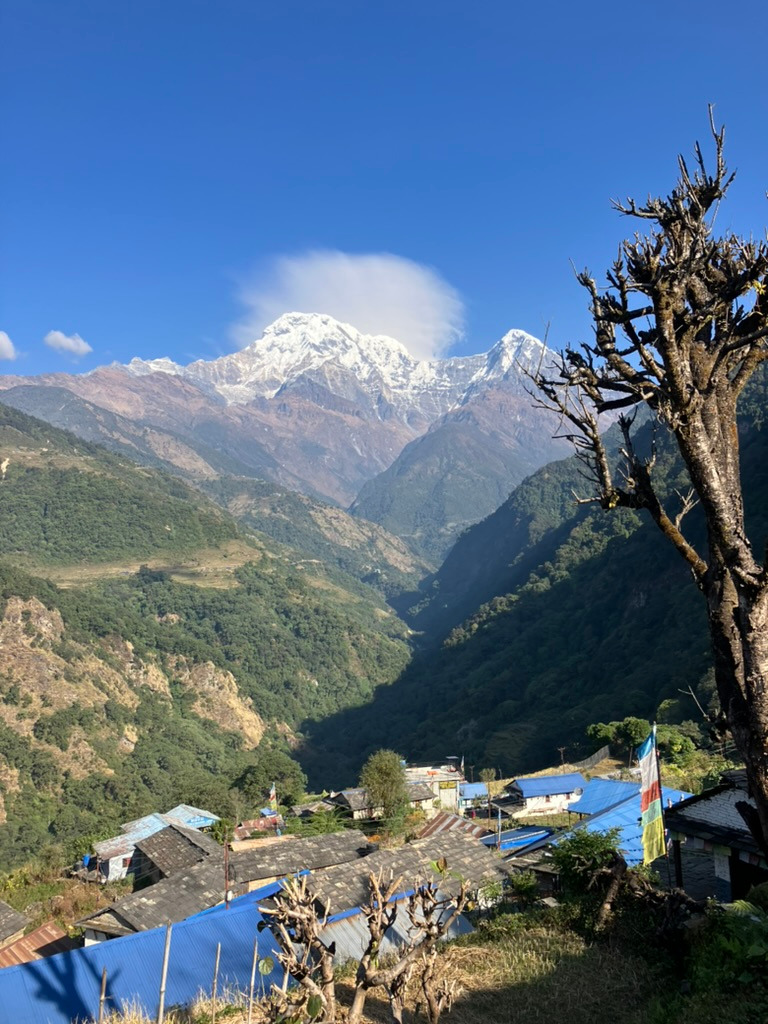
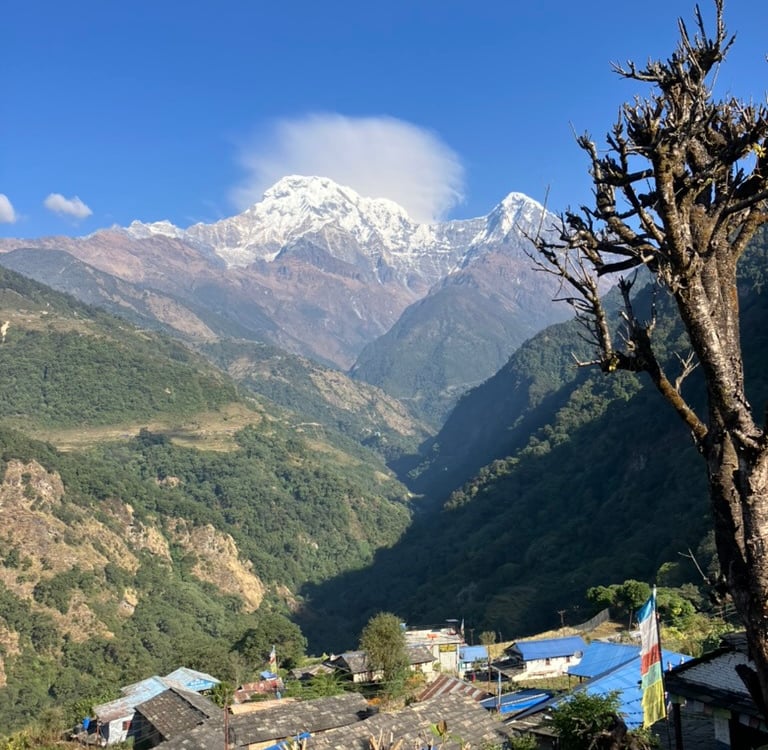
After a great breakfast at my guesthouse on the scenic viewpoint plateau, it was another day of serious climbing. Quite quickly, I found a steep path with many steps leading upward from Landruk. At first, there was still a kilometer with an open view towards Ghandruk and Annapurna South. Then, the trail entered a densely vegetated forest.
The forest was so thick and the climb so steep that the GPS on my watch struggled to keep up. But I steadily climbed, which was necessary because I had to cover nearly 2,000 meters of elevation gain to reach the High Camp of Mardi Himal. After a few kilometers in the forest, the trail became a bit less steep, and I arrived at Forest Camp.
There, I had a small snack and took a moment to look out over the valley. Then, I quickly continued because it was still early. With occasional steep sections, the path zigzagged upward through the forest. Occasionally, I met other groups of climbers, but it was relatively quiet.
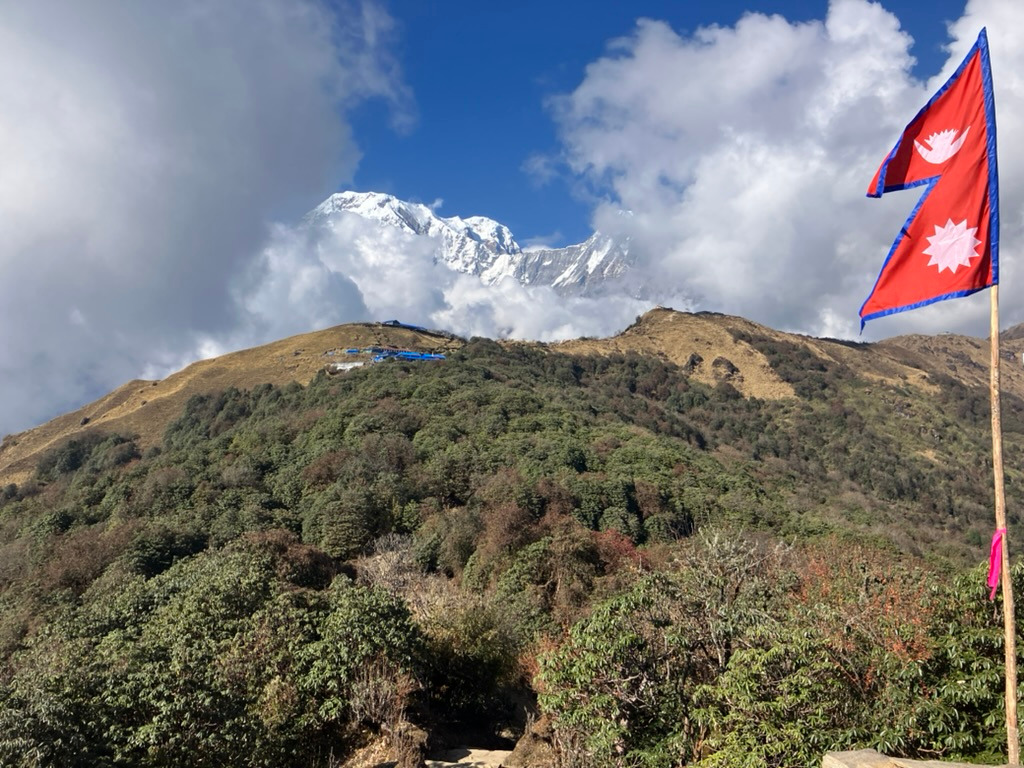
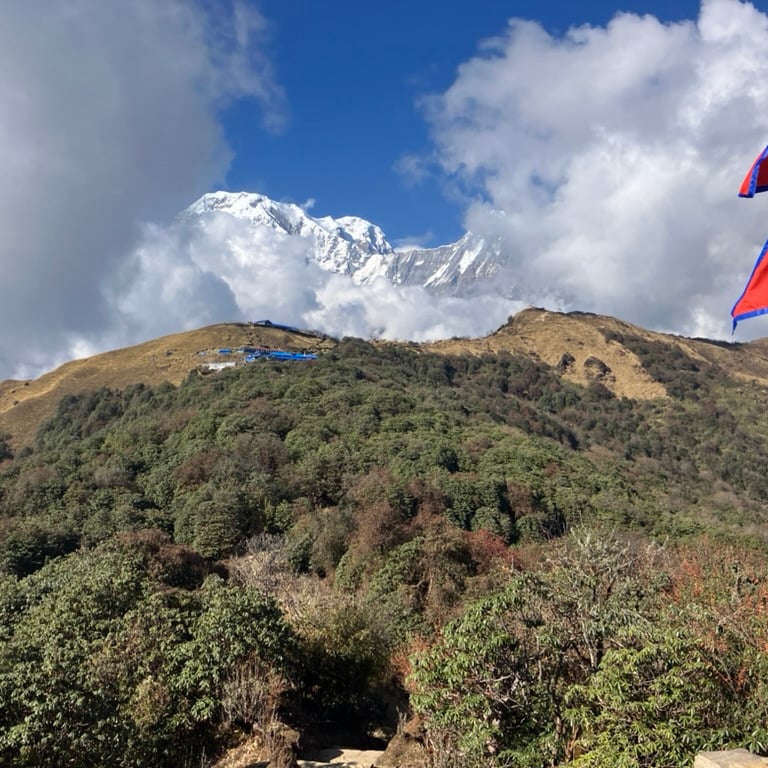
Only after noon did I take time to rest again with lunch at Low Camp. From the lunch spot, I sometimes saw the clouds part to reveal the iconic peak of Mardi Himal. Well-fed, I continued the last stretch upward toward High Camp.
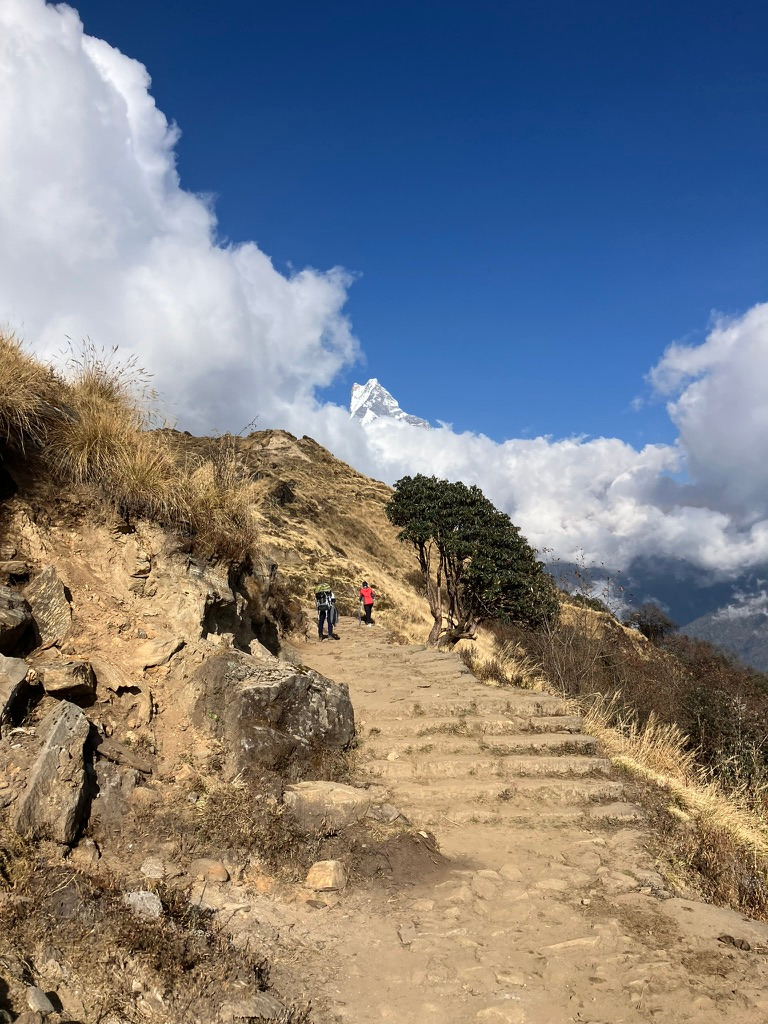
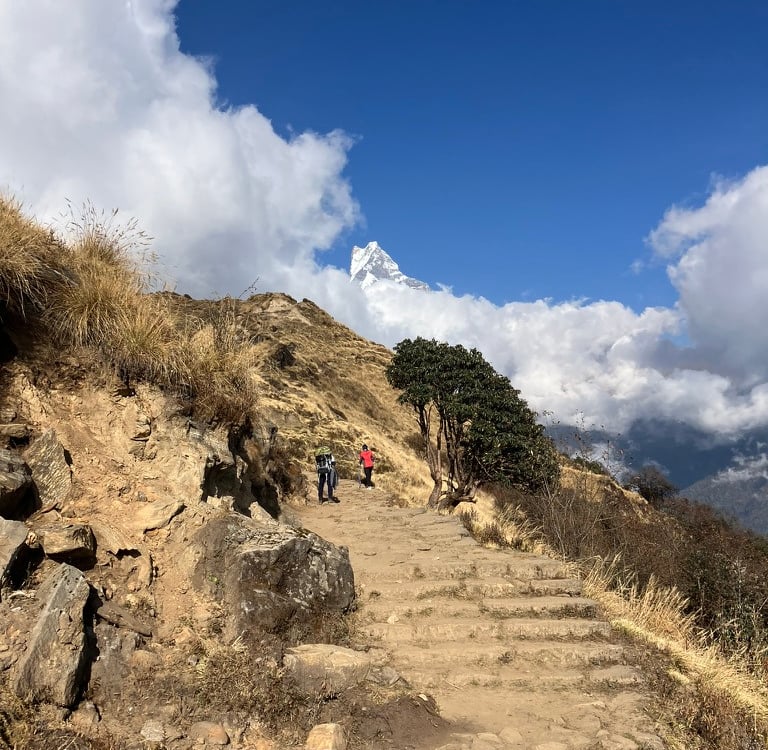
The path first remained steep through the forest but then gradually rose above the tree line, following a nice gradient. To the left, I had a view of the Annapurna Valley, which you enter when heading toward Annapurna Base Camp. To the right, the peak of Mardi Himal loomed more and more.
Various clusters of guesthouses line the trail, and there were still quite a few other climbers around. I wanted to get as far as possible, so I kept walking until I reached High Camp, where I found a place to sleep. It was quite cold now that the sun had set and the wind was picking up, so I went inside with a warm hot chocolate and enjoyed a delicious Dal Bhat.
I went to bed early again because I wanted to start the final climb toward Mardi Himal Base Camp before sunrise. It had been a day with almost no flat sections on the route, everything went steeply upwards. So, in about 13 km, I had climbed 2,100 meters in elevation.
Stage 20: Mardi Himal High Camp – Sidhing (16 km)
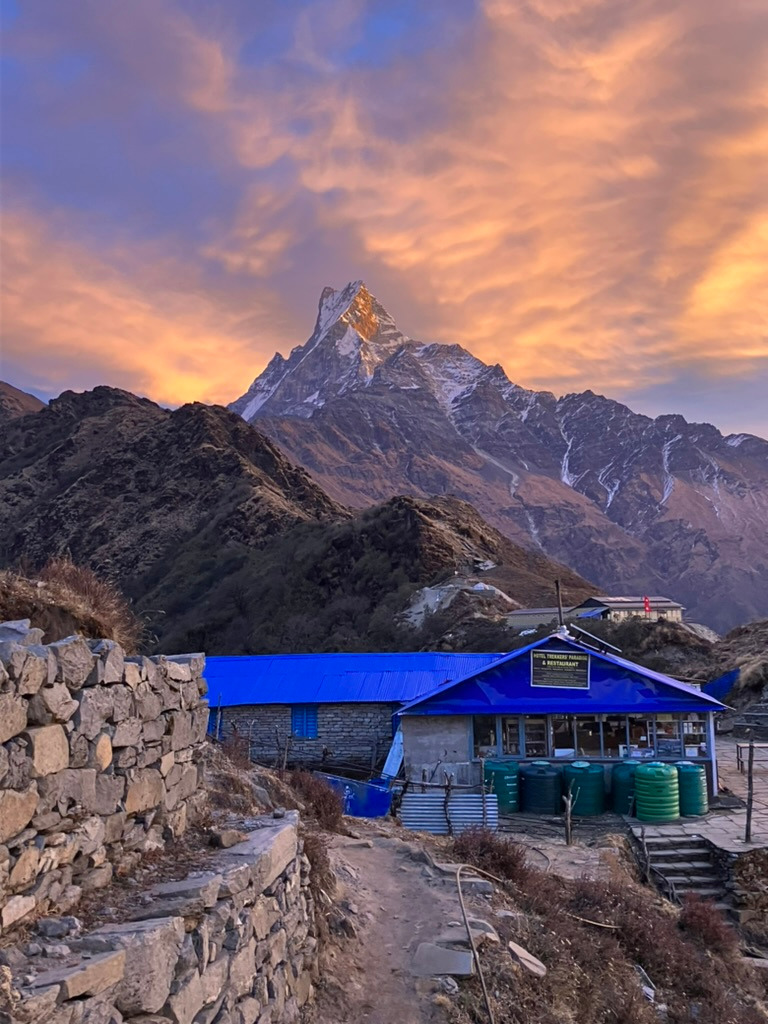
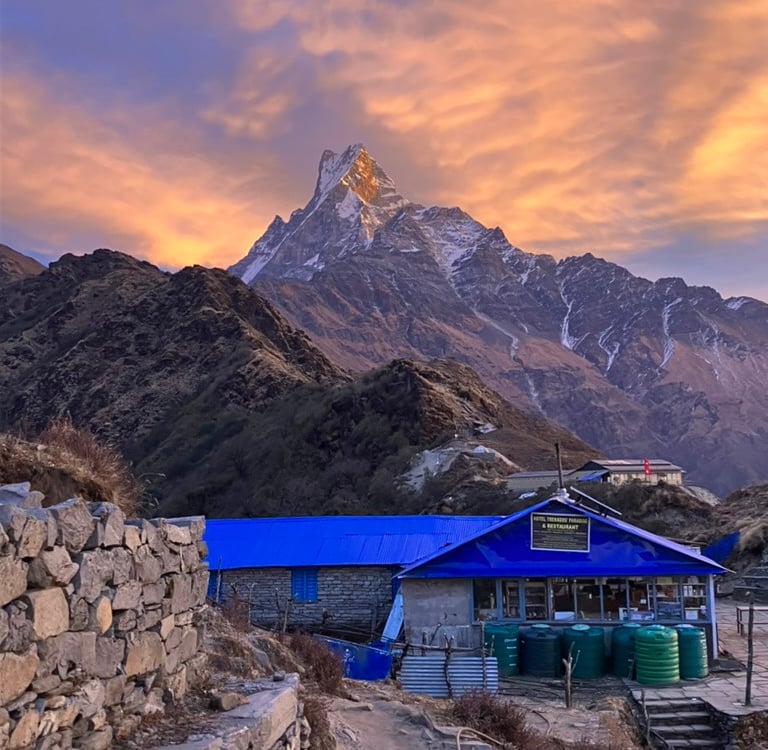
I had set my alarm to go out just before sunrise. Some groups choose to get up even earlier to be at the top by sunrise, but I preferred to walk in the daylight. When I stepped outside, the sky was a stunning shade of purple, red, and orange, and I began my hike.
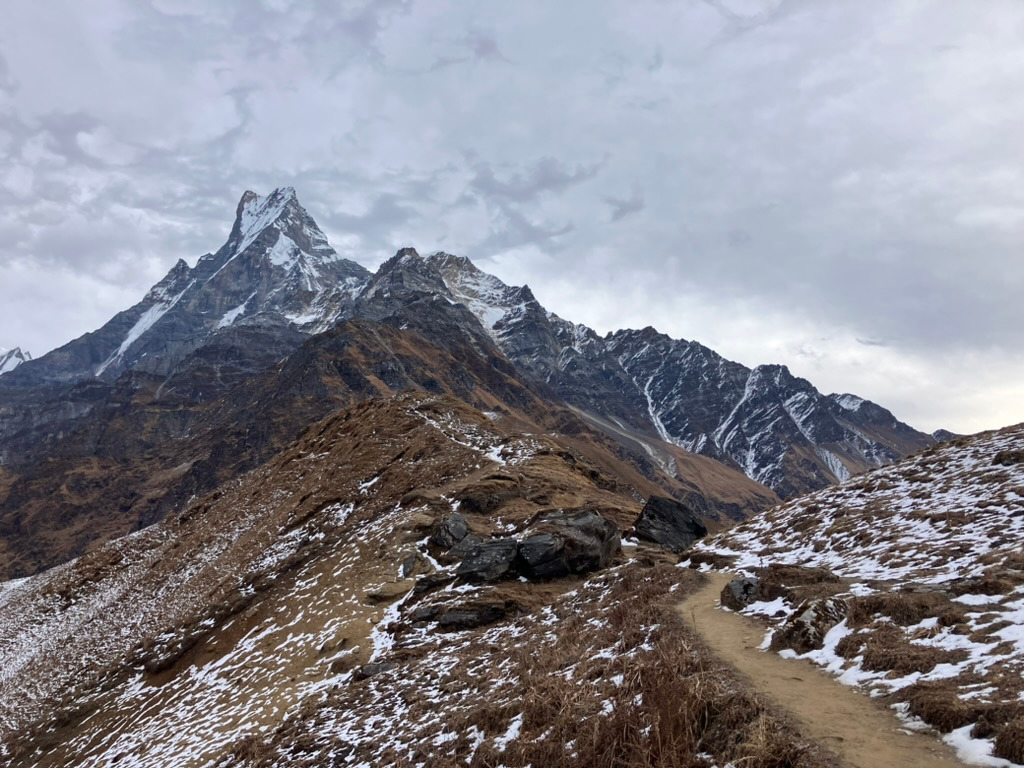
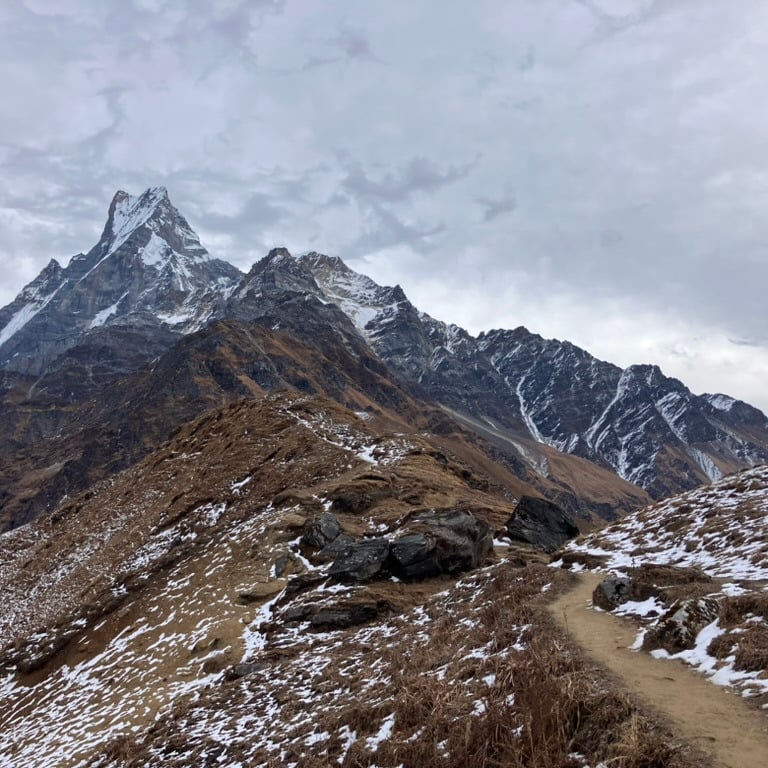
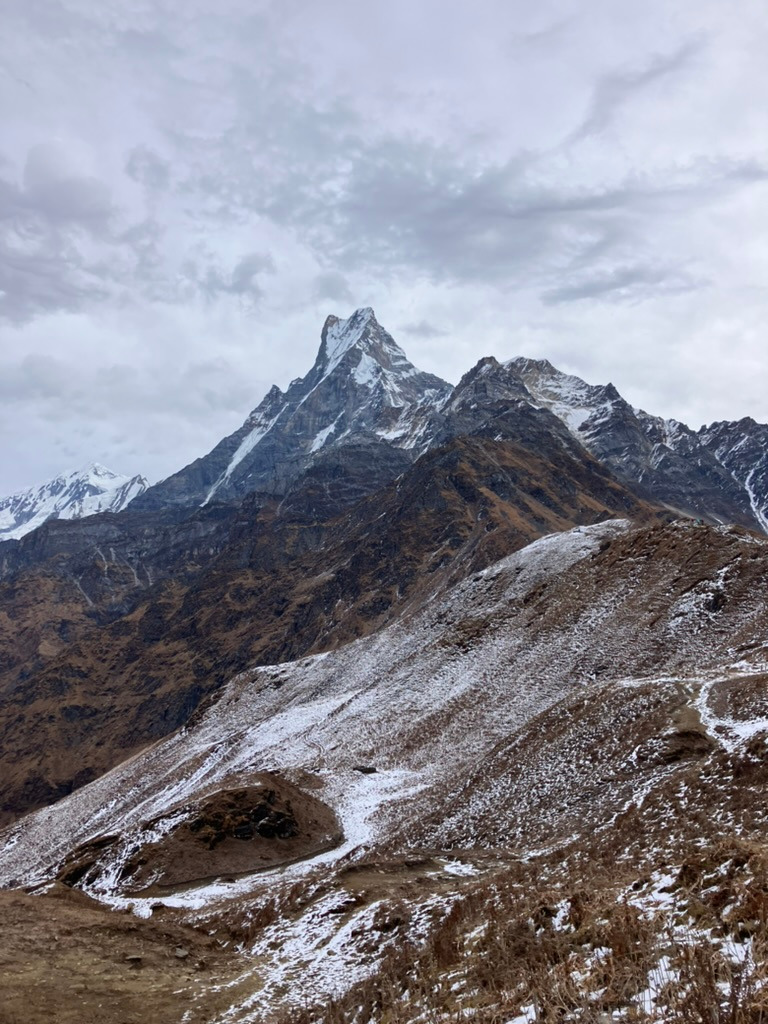
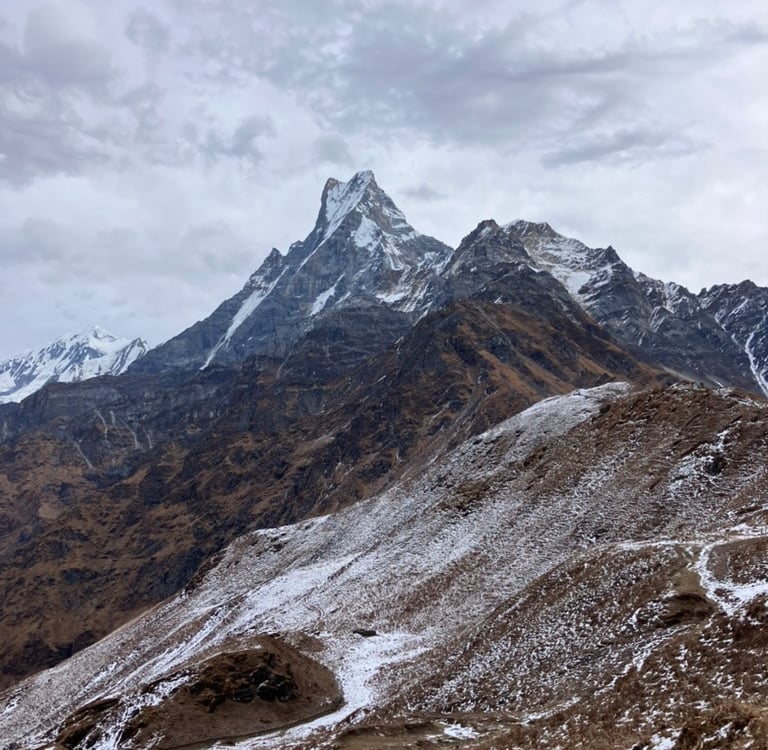
First, I passed all the other huts in High Camp and soon continued along the path toward Mardi Himal. The trail followed a gradient, and at the end of the path, the magnificent shapes of the sacred mountain came into view. In both valleys, it was still dark, but the mountains were already beautifully lit by the first rays of sunlight.
I walked past some higher-altitude huts and occasionally overtook groups of Nepali hikers. In about 4 km, I climbed from 3,500 meters to well above 4,000 meters. My watch struggled with the cold at the top and turned off, so I don’t know the exact details, but it didn’t matter, the view was stunning the entire way.
In the left abyss, I could see the route toward Annapurna Base Camp. On the other side of the valley, the first white peaks of Annapurna South appeared, and further on, the towering 8,000-meter peaks of the various Annapurnas. Straight ahead, Mardi Himal stood majestically. In the right valley, I saw many green hills, rows upon rows leading to the mountains on the right side of Mardi Himal.
The path was clear and occasionally required some steep climbing, but it was otherwise well-traveled. Locals and tourists filled the trail because it’s a popular route for everyone. Around 4,000 meters in altitude, I occasionally spotted patches of snow on the yellow bushes on the shadowy side of the gradient. After an hour and a half of steady climbing, I reached the point where the route toward Mardi Himal Camp turns off. The mountain cannot be fully climbed, so the path doesn’t go any further. After soaking in the breathtaking view, I took the same route back to my hut in High Camp. There, I enjoyed breakfast and packed my bag for the long descent.
Around 10:00 a.m., I began the descent. First, I retraced my steps along the same road I had climbed the previous afternoon, passing the various camps until I reached Low Camp. There, I took a left turn and found myself on a new route. The path descended steeply through a beautiful green forest.
At every open spot, I could see Mardi Himal, each time a little bit smaller as it receded into the distance. Large parts of the route consisted of stone steps. While I was enjoying a delicious lunch at a guesthouse, a whole procession of horses and donkeys walked down the path.
Early in the afternoon, I arrived in the village of Sidhing, where it had become pleasantly warm, a big difference from the cold in the early morning. I found a beautifully located guesthouse where all the flowers were in colorful bloom at the end of the small village. I took a well-deserved warm shower and celebrated the birthday of a woman from a couple staying in the same guesthouse. After climbing about 750 meters, I had descended almost 2,500 meters to an altitude of around 1,900 meters.
Stage 21: Sidhing – Lumre (7.5 km)
It was the last day of my entire journey. From Lumre, I would take the bus back to Pokhara. What a wonderful adventure it had been, I had enjoyed every day: the views, the kind people, the hearty food, the walking, and all the other experiences I had along the way. Perhaps the most beautiful month of my life.
After one last look towards Mardi Himal from my balcony, I set off. The final morning of walking turned out to be a bit more complicated than I had expected, either because the route wasn’t entirely clear or because I didn’t want to walk on the main road. Occasionally, I found myself walking straight through a yard or a house, but whenever I asked for directions, I was always pointed in the right way, so it didn’t matter.
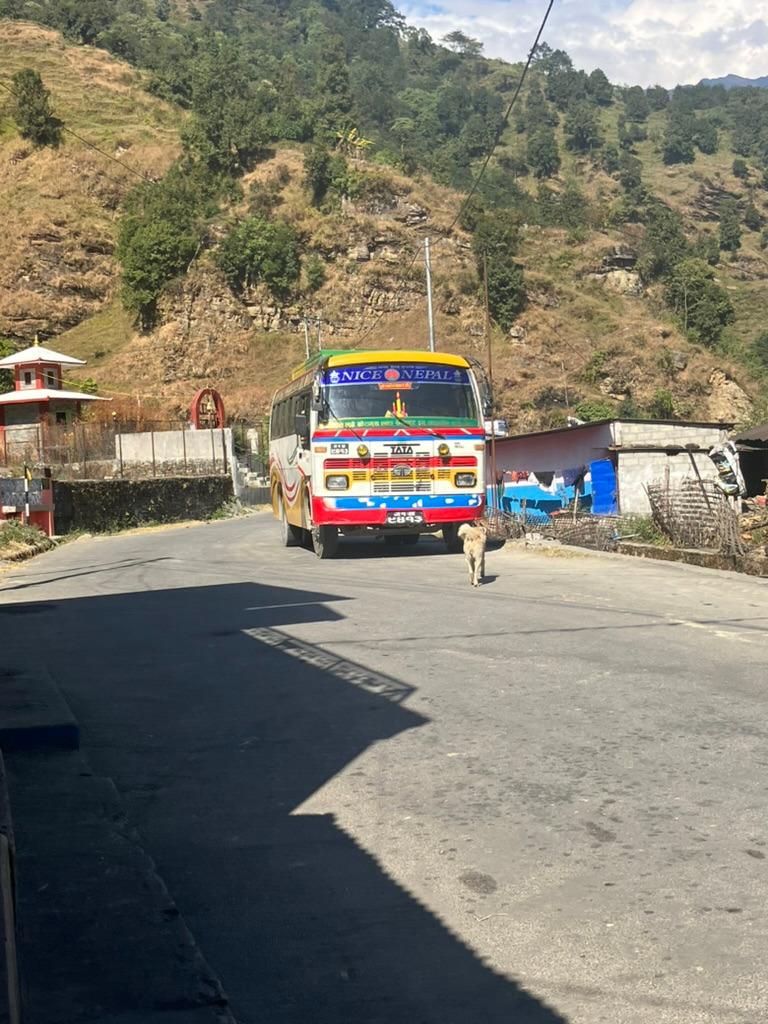
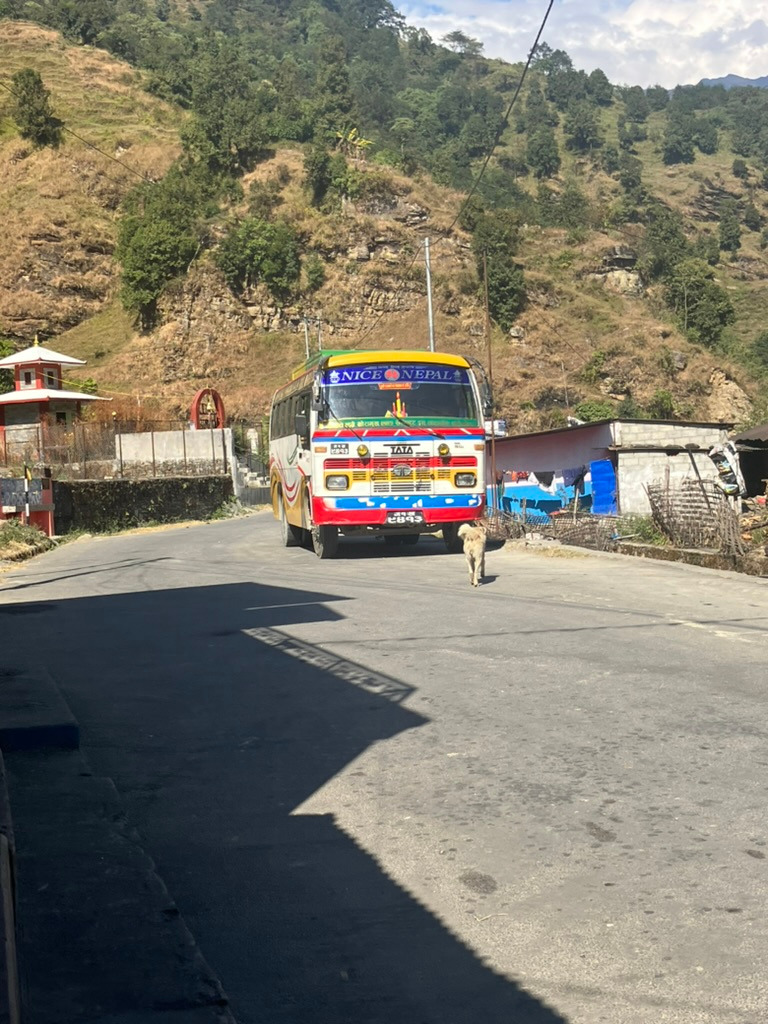
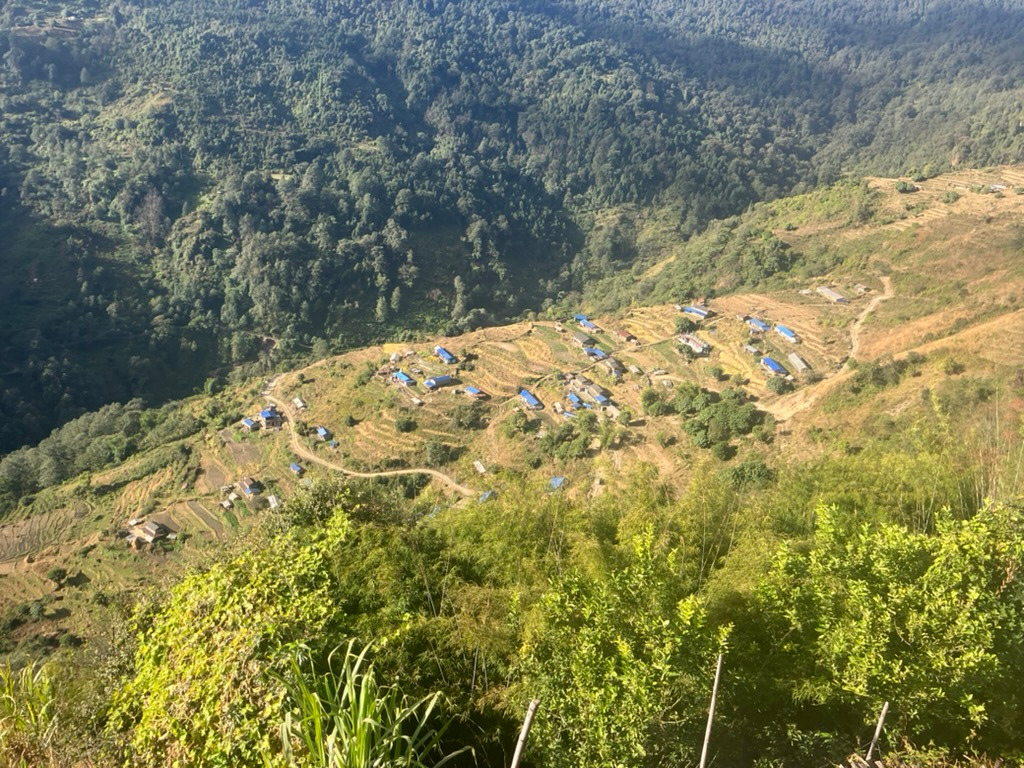
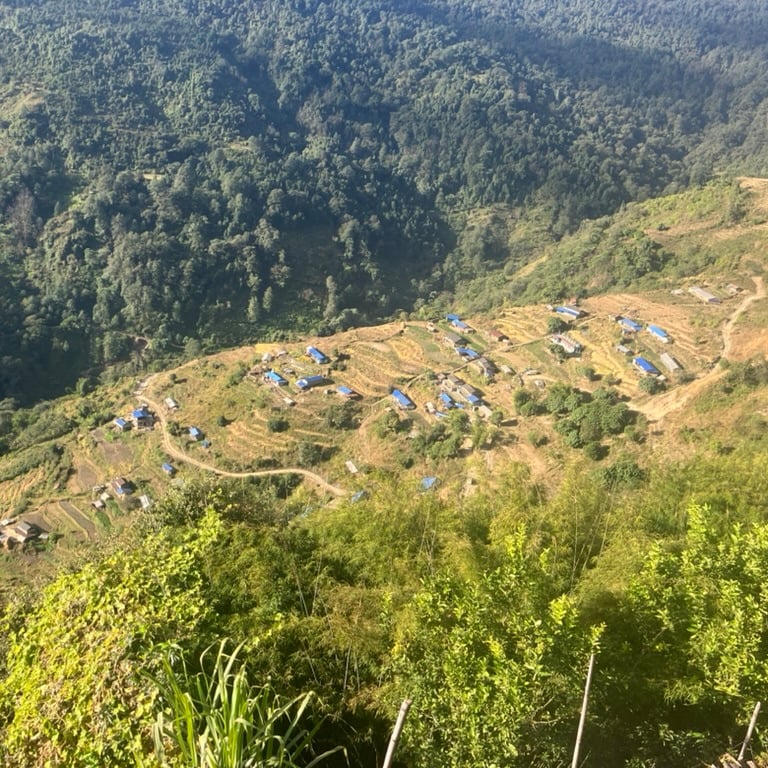
In three stages, I descended to 1,200 meters altitude, with beautiful Nepali houses with blue roofs appearing everywhere in the landscape. I passed through increasingly larger villages, truly leaving the mountains behind. In Lumre, I had to wait for about an hour until the colorful bus departed for Pokhara, where I arrived at 2:00 p.m.